Beyond the Audit: Operationalizing ISO 27001 and 400+ Threat Vectors
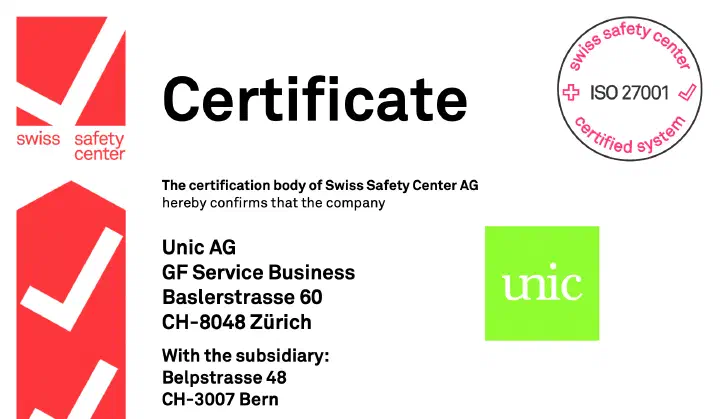
Information security certification is often treated as a superficial check-the-box compliance exercise. However, when an enterprise hosts critical digital commerce platforms, financial portals, and customer data for leading European brands, security must be an active, living operational discipline.
As the sponsor and driver of the ISO 27001 certification program for the Unic Service Business, I directed the strategy, risk modeling, process re-engineering, employee training, and external audit necessary to achieve formal accreditation under ISO/IEC 27001.
Systematic Threat Modeling: Analyzing 400+ Risk Scenarios
Rather than applying generic templates, we conducted a rigorous, bottom-up risk assessment evaluating over 400 distinct threat vectors across infrastructure, software supply chain, personnel, and physical environments:
+-----------------------------------------------------------------------------------------+
|                        ISO 27001 Information Security Architecture                      |
|                                                                                         |
|  +---------------------+    Threat & Vulnerability Analysis     +--------------------+  |
|  | Context & Assets    | -------------------------------------> | 400+ Risk Matrix   |  |
|  | - Web Infrastructure|                                        | - Likelihood (1-5) |  |
|  | - Client Databases  |                                        | - Impact (1-5)     |  |
|  | - CI/CD Pipelines   |                                        | - Risk Score (1-25)|  |
|  +---------------------+                                        +--------------------+  |
|                                                                            |            |
|                                        Risk Treatment & Controls Selection |            |
|                                                                            v            |
|  +-----------------------------------------------------------------------------------+  |
|  | Annex A Security Controls Implementation:                                         |  |
|  | * A.9 Access Control: Zero-trust RBAC, MFA, privileged access management (PAM)    |  |
|  | * A.12 Operations Security: Automated patch management, malware defense, logging |  |
|  | * A.14 System Acquisition & Dev: Static code analysis (SAST), secrets management  |  |
|  | * A.16 Incident Management: Major incident playbooks, tabletop drills             |  |
|  | * A.17 Business Continuity: Redundant multi-region failover, verified backups    |  |
|  +-----------------------------------------------------------------------------------+  |
|                                            |                                            |
|                                            v Continuous Monitoring & Audit              |
|  +-----------------------------------------------------------------------------------+  |
|  | Independent Third-Party Certification (Accredited External Auditors)              |  |
|  +-----------------------------------------------------------------------------------+  |
+-----------------------------------------------------------------------------------------+
Key Operational Transformations
To meet and exceed ISO 27001 standards, we introduced foundational architectural and operational enhancements:
- Privileged Access Management & Zero Standing Privileges: Eliminated shared administrative root accounts. All engineer access to production servers was routed through audited bastion hosts requiring session recording and multi-factor authentication.
- Deterministic Major Incident Playbooks: Developed comprehensive response workflows for Sev-1 incidents, establishing clear escalation paths, external communication protocols, forensic data preservation, and post-mortem review cycles.
- Automated Vulnerability Management: Integrated automated vulnerability scanners into the hosting infrastructure, categorizing CVEs with strict SLA remediation targets based on CVSS severity scores.
- Physical & Environmental Security Controls: Audited and enforced strict dual-custody access controls, CCTV monitoring, and power/cooling redundancies across partner data centers.
- Secure Software Development Lifecycle (SSDLC): Embedded security checks, dependency scanning, and automated linting directly into GitLab CI/CD build pipelines.
Measurable Business and Operational Impact
Achieving ISO 27001 certification produced lasting strategic advantages for both our organization and our clients:
- Customer and Partner Trust: Provided enterprise clients with verifiable, accredited proof that their e-commerce and web platforms adhere to the highest international security standards.
- Risk Reduction: Drastically reduced the attack surface and established predictable, rapid containment protocols for potential security events.
- System Rationalization: Consolidated redundant legacy hosting tools into a streamlined, audited toolchain—lowering operating costs while boosting uptime.
By framing ISO 27001 as a blueprint for technical excellence rather than a compliance hurdle, we fostered a durable security culture that empowered our teams to deliver resilient digital experiences.